

Inevitability
A Defense (of Sorts) of Trump

Several years ago, a malign force swept through our country.
It up-ended practically everything about our lives – our economy, our family arrangements and friendships, our work lives, our schools and universities, our government, virtually all our institutions.
No, I don’t mean Donald Trump: I mean COVID-19.
It wasn’t a thinking organism. It wasn’t intentional, in the broadest sense of that word. It just happened. But there are two things worth remembering about COVID-19:
The changes it brought about were inevitable: They were going to happen anyway. They largely were happening already. They were due to deeper tectonic shifts in the world we inhabit. They just occurred sooner and quicker than if COVID-19 hadn’t happened. (Although, of course, for the same reasons, something like COVID-19 was going to happen.)
Those changes aren’t going away: They aren’t temporary. They aren’t passing COVID-related phenomena. They’re the new end-times. The before-times aren’t coming back.
The same is true right now. And I do mean Donald Trump. And that ought to change how we think about (as I constantly put it) why the world’s a mess – and what to do about it.
THE TIMES THEY ARE A-CHANGING – REGARDLESS
I discussed this in great detail at the beginning of the pandemic. (If you would like to read [or hear] more on that, see "A Tale of Two Worlds: Before Coronavirus and Postpandemic," "The Shape of Tomorrow," and this video, The Impact of COVID 19 on Global Politics & Economics.)
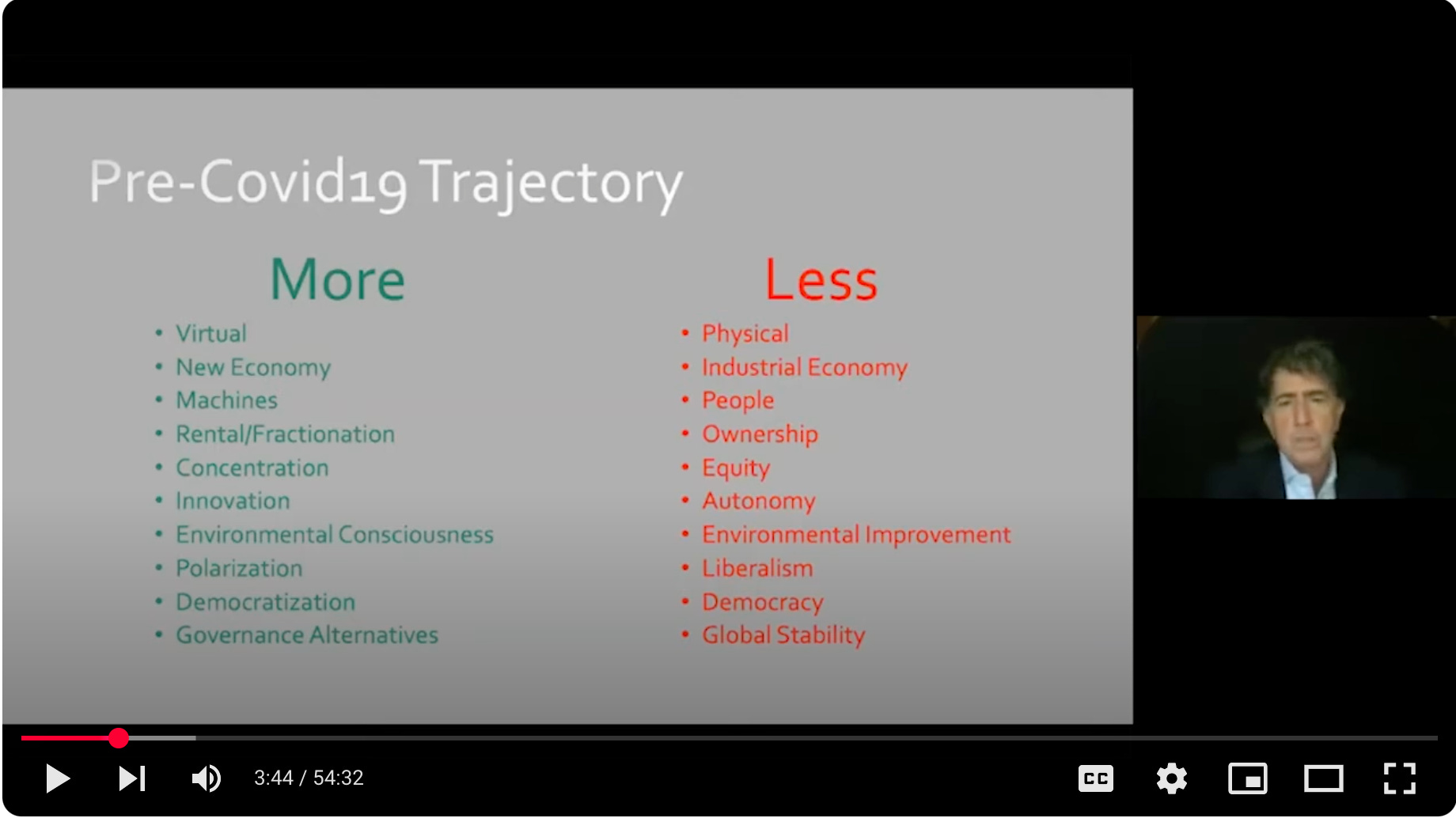
Let me just summarize by saying that, before COVID, we already were moving toward a world where, eventually:
Work and school would increasingly be delivered virtually and remotely.
As part of this larger phenomenon where distance and location would matter a whole lot less, someday, you were going to be able to order home delivery from your favorite restaurant in London (even to, say, Peoria, Illinois). Someday, you would do all your shopping virtually and it would show up literally overnight (if not sooner) at your front door.
Your every movement and thought would be tracked and recorded in real time, because your entire life would have shifted online. This would empower a small group of oligarchs who would channel and thus control what you read, and therefore think. These guys – they’re pretty much all guys – would pretend for a long time to be politically liberal, socially progressive, and free-market oriented, but it would eventually emerge that they actually were anything but.
You would live largely within your own virtual bubble, in a reality of your own creation. That personal reality would be reality, except in the rare instances where it bumped up against a different reality in the real world – which would rarely happen because all your information would come from sources you curated and your real-world associations would be confined to people you chose, all of whom conformed as much as possible to your custom-tailored “virtual” reality. When realities did collide, however – such as believing you could fly, or your candidate losing an election in which others might have a say – the collision would be violent.
Within these bubbles, people – especially young people – would begin constructing new sorts of living arrangements. Some would enter into and stay in extended, multi-generational family homes – perhaps a “traditional” model but one actually not very prevalent for many decades – while others would arrange themselves, one way or another, into self-contained “pods” of mixed types of arrangements: some relatives, some unrelated individuals, some families with children, some lovers, all mashed into one unit. Conceptions of family and sexual relationships would thus be subjected to redefinition.
Because everyone would be able to construct and live within their own reality, “do their own research,” and create their own “alternative facts,” all forms of authoritativeness and authority were going to disappear – legacy media, government, science, academia, expertise of all sorts.
Then came COVID, and all of this happened. Only it was everything, everywhere, all at once – and thus somewhat sooner than it all would have happened, anyway.
As a result of these changes – which, in my view, are most simply explained as a technologically-driven evolution – we entered simultaneously a time of anarchy and a time of authoritarianism. A time of disaggregation and a time of centralization. A time of hope and a time of fear. A time of democracy at its purest and a time of democratic decline. In fact –
It was the best of times, it was the worst of times, it was the age of wisdom, it was the age of foolishness –Well, you get the point.
My argument here, if you haven’t so far gathered it, is that one could imagine Trump 2.0 as a similarly-unthinking virus, a series of events happening more-or-less mechanically as if without any intentional being animating them – and, more importantly, developments that were going to occur anyway. Just not quite so soon, not quite so everything, everywhere, all at once – and for the same reasons that the results of COVID were coming our way, regardless.
TRUMP AS ACCELERANT
Donald Trump thus is not the animating actor of our times; but neither is he an anomaly: He is, rather, the accelerant.
In fact, all the craziest stuff I’ve always said was going to happen eventually … just did. For instance, I wrote this for CNN about “the ongoing privatization of government in the 21st century”:
I don’t mean “privatization” in the sense of “outsourcing,” or contracting out a function to a private company that is working for and being paid by the government. Rather, I’m referring to a private entity or group exercising hitherto-sovereign governmental functions.
Could be “ripped from the headlines” stuff – but I wrote that in 2019 and was talking there about President Trump 1.0 and his consigliere, Rudy Giuliani, setting up what was essentially a parallel private-sector State Department for purposes of dealing with Ukraine. That followed my 2016 analysis (“Trump’s America is already selling”) referencing Trump’s now-little remembered notions pre-inauguration to “job out” some of his security to a private company, rather than relying solely on the Secret Service, and creating a private-sector intelligence community rather than relying on, say, the US intelligence community. Now, it’s the entire federal government.
(If you’re interested in more, the CNN piece goes deeper into detail on the broader subject of governments becoming private companies and private companies becoming governments, as well as providing links to a variety of what I’d written previously on all this.)
But my point here is that what you’re seeing from Trump 2.0 now isn’t a new, more extreme version: It is exactly what was there from the very beginning, before Trump 1.0. And it is, in fact, much bigger than the Trump Administration and anything you’re seeing now, and it has been coming for a long, long time for reasons that have nothing to do with Donald Trump.
In short, what is happening now is largely inevitable, and was going to happen anyway. It’s just happening a little bit sooner and a little bit faster (by maybe a few years…) than even I expected, thanks to Trump. But he’s only doing what the wheels of history were going to do, eventually, anyway, in the not-too-distant future, to destroy everything you know.
Instead of crying on the banks of the rivers of Babylon, bemoaning the collapse of the past, however, we should be better defining exactly what is happening, analyzing why this is happening, and strategizing as to what choices we have about what happens in the future.
WHAT’S HAPPENING
Let’s start with what is happening:
The federal government is being taken over by private businesses. The bigger part is being subsumed by the bigger businessman – Elon Musk – and is apparently headed to being a subsidiary, either de facto or de jure, of the larger, private-sector financial payments system he is constructing. The government will go out of that business – along with most others. (As I previously wrote elsewhere, federal personnel operations have already been outsourced to Musk, and applicants had to subscribe to X to get into the mix, essentially turning even government employment into a privatized revenue stream for Musk.)
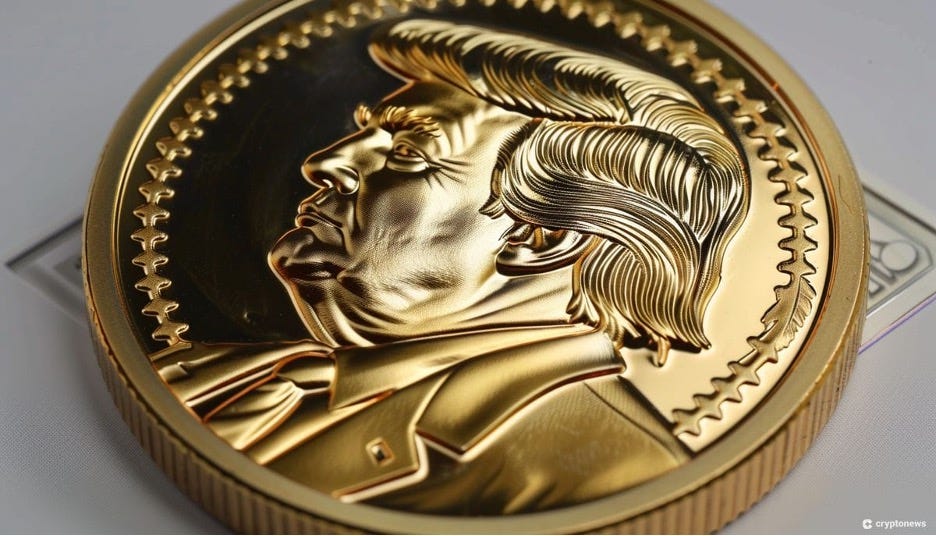
Lesser functions, particularly foreign affairs, are being reserved to the lesser plutocrat, Co-President Trump. More than the domestic side – where the range of government functions offers more numerous options for privatization to friendly oligarchs – international relations are not only the sole province of the president but also offer all sorts of opportunities for real estate development (have you ever looked at a map and seen how big Greenland is??!! The Gaza luxury development announcement – spooled out literally as I was writing this – reads like the kind of parody of what’s coming that I wish I had written…). Even more so than during Trump 1.0, foreign countries represent a veritable gold mine for the Trump family’s holdings: Forget lucrative Chinese patents for Ivanka’s latest fashion line – Paul Krugman speculates that a small number of “whale” investors who just bought almost all the ten million dollars in otherwise-worthless Trump meme coins were agents of the Chinese government acting both to ingratiate themselves to, and literally own a piece of, our president. (The coin lost 75% of its value immediately after Trump announced his tariffs on China.) In any event, you can bet that Trump’s newly-minted “Sovereign Wealth Transfer” – er, “Fund” – initiative is headed in the same direction. In short, the nation’s foreign and security policy have already been largely converted into a sole-member LLC; after that, why not everything?
As for what’s not suitable for outright auctioning off, people whose life missions have been to destroy specific government agencies, policies and programs have been put in charge of them.
At the end of the day, little is being left of the federal government. Not much of state and local governments, either.
The distinction between our country, on the one hand, and Russia, China, and other potential investors, on the other, is dissolving not just as a matter of political philosophy but as separate operational and financial entities. Of course, that may not matter that much because the entire notion of “country” is dissolving – turning into little more than just another sports team, in a league with the others, owned by a small group of vainglorious rich guys who take your money, don’t care what you think, and constantly disappoint you, but to which you retain some strange loyalty despite it all based on nostalgic territorial and familial ties. Plus, of course, they have armies and nukes.
What little of traditional “government” that will be left, then, will soon be wholly the surveillance state. Of course, that may not matter that much, either, because what’s left of the private economy that’s buying up what’s left of the Enterprise Formerly Known as The U.S. Government will be pretty much just the surveillance economy.
Everything else going on right now – the apparent lack of a legislative branch, a subservient and farcical consumer complaint process (formerly known as a judicial system), a Bill of Rights that more resembles the fine print in every corporate adhesion contract, the marginalization of low-dollar customers – might freak you out, but it all flows from the foregoing and, really, isn’t any different from what you’ve come to accept every day from, say, Facebook.
The problem is that you didn’t think that that’s what government is about.
But, as I’ve been arguing for years now, that is exactly what government is going to be about in the 21st Century – and exactly what a second Trump Administration was going to be about – and you should forget about thinking otherwise. None of this should be a surprise; the only surprise is simply how fast they’re implementing all this.
Lots of folks want desperately to believe that things will be OK because Trump 2.0 appears as incompetent as Trump 1.0, what with withdrawn directives and court injunctions and such.
Don’t you believe it.
They’re dismantling the entire 20th Century within just a few weeks. There will be a few stumbles. But whether you like it or not (a) government as we knew it in the 20th Century (and, for that matter, everything else we’ve skimmed over in this piece, from the nation-state to the economy to the current family model) has been approaching its sell-by date for some time, and (b) the Trump Administration is doing a damn good job of selling it.
In fact, you need to recognize that this whole product line has some really avid consumers. The latest Emerson College poll shows that, however self-evidently horrid you think this all is, more Americans approve than disapprove (and in every age group except those over 70, who, of course, are more nostalgic about the 20th Century) and 52% believe America is on the right track – which may not sound like all that much until you realize that, only last month, before this all started, two-thirds of Americans thought we were on the wrong track. So, yeah, this is popular. All you folks waiting for it to come crashing down when the price of eggs goes up: You’re going to have a long wait.

WHY IT’S HAPPENING
Why is this? Is it because everyone else is a racist and misogynist? a crypto-fascist? a Putin stooge? No, it’s because this is happening, and was going to happen, for deeper reasons. I have found – as many others have as to crowds in all sorts of contexts – that the American People, collectively, are a smart system and generally sense (not necessarily understand, but sense) real-world developments sooner and better than those who lead them. Most Americans have a sense that not only is everything today falling apart, but also that it should be: Do you think that the imperial systems of the 19th Century should have outlasted World War I? Why then should the New Deal and the post-war world order – as great innovations as they were 80-to-90 years ago – outlast the passing of the Baby Boom generation? The world is changing; everything you know will be gone by the 2030’s – I’ve been saying that since the 20-teens.
Most people, at some level, have understood this for some time. It’s not just the core Trump supporters, who turned to him first because they recognized that the world we’re living in today was leaving them behind – economically, socially, politically, demographically, ideologically – and voted for Trump in 2016 to burn it all down. It’s increasingly the majority of Americans. The “conventional wisdom” as John Kenneth Galbraith first called it, until now has been that it’s simply people like former steelworkers who turn to Trump – pretty understandably, which is obviously why Trump’s first stop after the 2016 GOP convention was in the former steel center of Monessen, in my home state of Pennsylvania. But, as Galbraith pointed out, wisdom is generally wrong by the time it becomes conventional: Everyone from writers to radiologists are now going the same way as steelworkers, thanks to technology. Did you really think they weren’t going to join the same movement?
There’s more to why this is happening, which I covered in greater depth in my 2023 piece, Democracy Disrupted. Again, if I may do so modestly, I urge you to read it, if you’re interested.
WHAT WE SHOULD BE THINKING ABOUT
This leaves the question, What choices do you have about what happens next? This is a core theme of the first chapter of my book-in-progress (working title, The Greater Good, like this newsletter): There are things that make the world predictable in lots of ways, but that doesn’t make it deterministic. We can – and must – make choices. I’ve compared the current moment (“moment” meaning “couple of decades”) to an earthquake – and there’s not much you can do during an earthquake but cover your head and hope you survive. But how we rebuild afterward is a choice, and the sooner we focus on that, the better.
What I’ve said to this point may imply that I think that the current Trumpist movement is the wave of the future. I don’t. It’s riding a wave, as Trump has for the last decade. But it is a wholly backward-looking reaction to what’s happening. I wrote just after the election that Trump is mentally stuck in 1954, when he was eight, and wants to roll the country back to then. The people around him, however, want to roll things back even further – and apparently have recently shown him books about some guy called William McKinley back in the late 19th Century (just like someone apparently alerted him to Andrew Jackson and Frederick Douglas shortly after he was inaugurated the first time). In reality, I think the rollback aims for a point in history even further back than that.
The problem is that there is, and long has been, no other alternative on offer. Most folks who call themselves “progressive” I find rather backward-looking and, thus, equally conservative: They are concerned primarily with addressing injustices that one can trace back to, say, 1492. They are focused on reversing the last several decades to return to ideologies and policies that one can trace back primarily to 1966. I’m just guessing here, but perhaps those don’t represent the problems we’ll face or the solutions we’ll need in, say, the 2030’s – and I think most voters sense that, too. So, to paraphrase both Harry Truman and my old boss Fritz Mondale, if given a choice between conservatism and conservatism, voters will choose conservatism every time.
We need to start thinking not about returning to the before-times, but about a very, very, very different tomorrow. That starts with accepting something Democrats have refused to accept, especially now as they confront the reality of today’s total rupture with the past, even though it was the key line in Bill Clinton’s theme song in 1992: Yesterday’s gone.
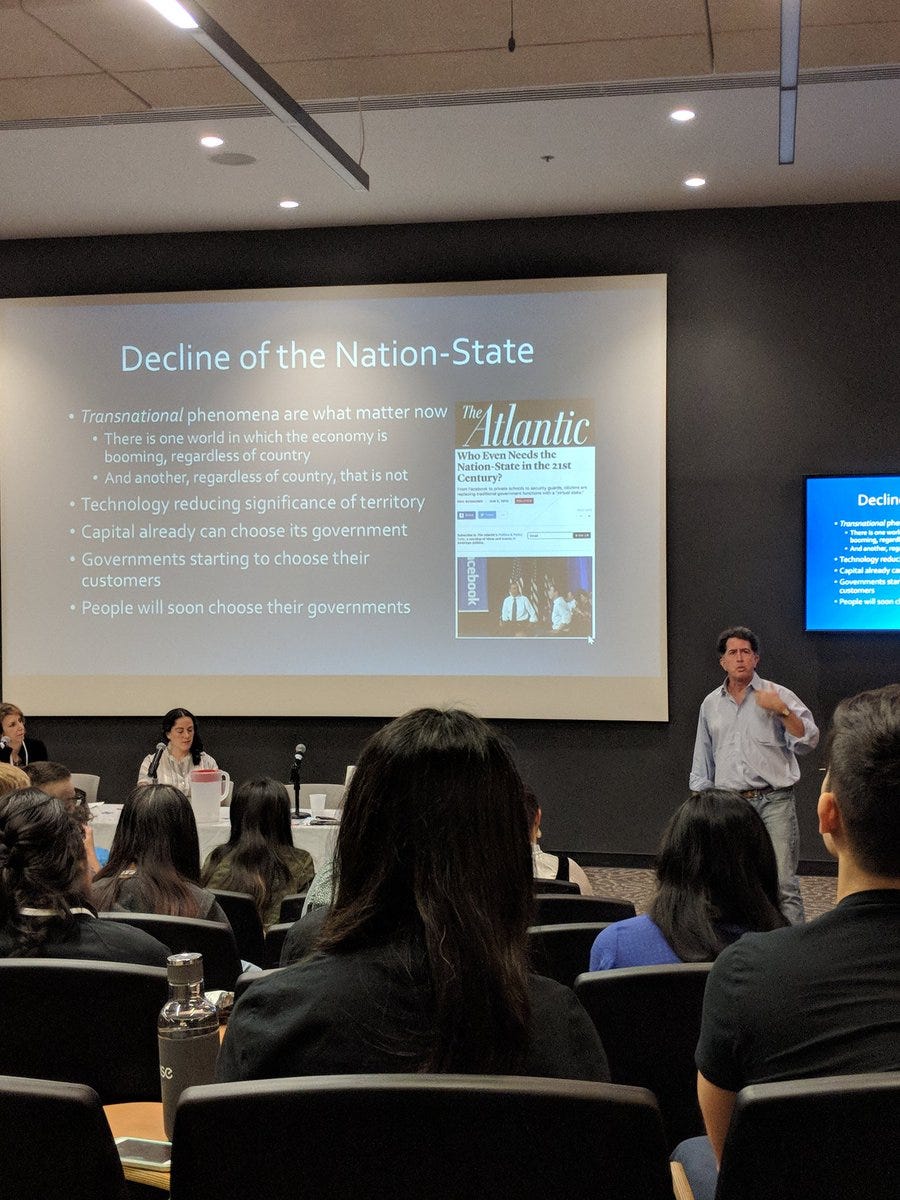
I’m going to discuss this more in my next newsletter in a few weeks, but I want to leave you with a story I’ve written about and told many folks before. Several years ago, I was asked to give a talk about much of this to a group of recently-graduated computer science majors who also were interested in “social change.” (That’s the picture at the top of this piece.) When I finished, the moderator, who had been a contemporary of mine at college, said, rather ashen faced, and as most of my friends and peers would say after reading one or another piece I’d written, “Really interesting – but scary.”
I was tired of hearing how scary I sound, so I pointed out to the 20-somethings in the audience and asked, “Do any of you find what I just said scary?” Not a muscle twitched in the place. “Of course you don’t,” I continued, “because you all already know that this is what’s coming.” They broke into laughter. Younger Americans got this years ago. Most Americans get it now. You need to get it, too.
This has been coming for years – like any bankruptcy, gradually, then suddenly. Now it’s here.
As I write in the book’s intro, to quote Paul Simon, “What are you gonna do about it?/That’s what I'd like to know.” You’re not going to stop this. You’re not going someday to reverse it. We need, rather, to better it.
To be continued….
Thanks for reading,
This is really interesting and thoughtful, but I don't think I agree with the idea that we are living through a period of accelerating change. What Trump, the GOP, and their billionaire backers are doing is demolishing institutions for the purpose of preventing change. Since 2008, conservative forces in our society have undertaken a brazen and aggressive campaign to obstruct and avoid social and economic reform. It has been more successful than I would have ever imagined. The only area where they failed was in the domain of personal sexual freedom and they are clawing that back now as well. Our political and legal systems are what allow change to happen. When they are gone, nothing will accelerate. We will just be stuck. Young people seem less worried because they have no memory before the financial crisis. They are not contented with a brave new world on the horizon. They just have no idea what they have lost and have been demobilized by a social media ecosystem that induces narcissism rather than empathy.
Thank you, Eric. I think the speed will be more than a lot of folks think they can handle. Therapy, distraction and separation, look like growth stocks now...